


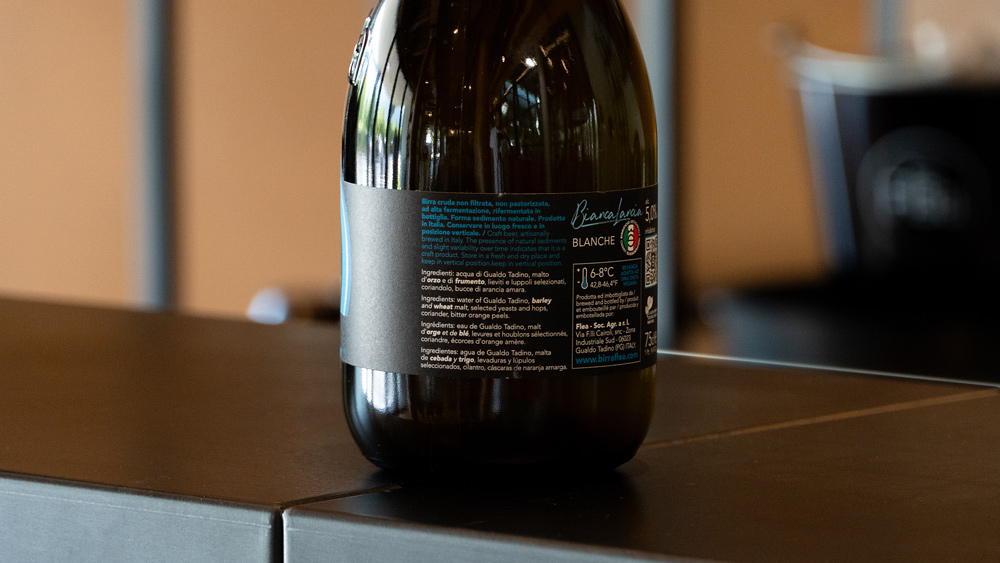



Description
Would you like to bring Bianca Lancia to your venue?
Contact us, and one of our sales representatives will be happy to assist you.

white
A pure malt amber beer brewed with 100% barley malt, featuring a distinctive aroma profile with smoky notes; it has an intense, dry, and slightly bitter flavor, with a caramel and hazelnut aftertaste derived from the use of specialty malts, and a dense, creamy, and persistent head.
Unfiltered, unpasteurized, top-fermented, and refermented in the bottle.
ingredients
Water from Gualdo Tadino, barley and wheat malt, hops, yeast, coriander, bitter orange peel.
Allergens: contains barley and wheat.
technical information
Alcohol content – 5.0% ABV
IBU – 15
Plato – 12.5 °P
Serving temperature – 6–8°C
awards
China Beer Awards 2016 - 3rd Place
Beer of the Year 2016 - Unionbirrai Association
Cerevisia 2017 - 1st Place Wheat Beer
The WineHunter 2017 - 1st Place
The WineHunter 2018 - Gold Rating
Int. Craft Beer Awards 2018 - 2nd Place
Bellavita London 2018 - 3 Stars
Singapore Awards 2019 - 2nd Place
World Beer Awards 2020 - 1st Place
World Beer Awards 2021
World Beer Awards 2022
London Beer Competition 2022 - 2nd Place
World Beer Awards 2022 - Design Gold
European Beer Challenge 2023 - Gold
formats
75 cl bottle
33 cl bottle
20-liter PolyKeg
pairings
Bianca Lancia’s fresh flavor and slightly tart notes pair perfectly with fish dishes and pasta dishes with light sauces; it’s also excellent with white meats, cold cuts, and both fresh and aged cheeses. Try it as an aperitif.

Why "Bianca Lancia"?
As a descendant of the prestigious Piedmontese aristocracy, Bianca Lancia was, among Frederick II’s four wives, the one whom—according to tradition—the sovereign loved the most. Their relationship was secret and tormented, yet so deep and passionate that it was the only one—at least according to chronicles and popular legends—to last throughout the Emperor’s entire life. Delicate and gentle, Bianca was, in fact, a constant and discreet presence throughout Frederick’s dazzling life. It is said that the marriage took place only at the end of the woman’s life, legitimizing the position and political rise of the son born of their union years earlier, King Manfredi (“blond and handsome and of gentle bearing,” according to Dante), who was the last splendid Swabian King of Sicily.