



Description
vuoi portare Bastola nel tuo locale?
Contact us, and one of our sales representatives will be happy to assist you.

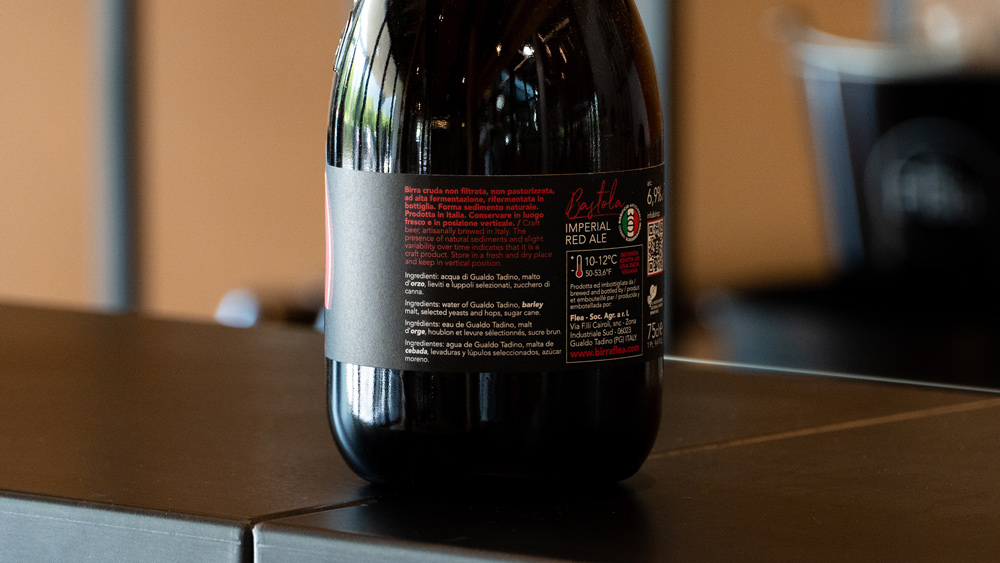
imperial red ale
Birra ambrata tendente al rosso intenso, con riflessi ramati e gradazione alcolica medio alta, che la rende adatta ai palati più esigenti. La schiuma è fine, persistente e cremosa, di colore beige chiaro, con buona persistenza e adesione al bicchiere.
Non filtrata, non pastorizzata, ad alta fermentazione e rifermentata in bottiglia.
ingredients
Acqua di Gualdo Tadino, malto d'orzo, luppoli, lieviti, zucchero di canna.
Allergeni: contiene orzo.
technical information
Alcohol content – 6.9% ABV
IBU – 25
Plato – 16.5 °P
Serving temperature – 10–12°C
awards
China Beer Awards 2016 - 2° Classificata
The WineHunter 2017 - Prodotto di Eccellenza
World Beer Awards 2022 - Design Gold
formats
75 cl bottle
33 cl bottle
20-liter PolyKeg
pairings
The dry, slightly bitter flavor of Bastola beer pairs perfectly with hearty, flavorful pasta dishes and red meat main courses, including game. It also goes very well with chocolate-based desserts.

perchè bastola?
La Bastola is the figure around whom all the legends, traditions, and folklore of the town of Gualdo Tadino have coalesced over the centuries. Local medieval chronicles hold her responsible for the fire that destroyed the town in the 13th century, from whose ashes the modern town was reborn, thanks to the benevolent urban planning efforts of Frederick II. Poets, artists, writers, and historians have portrayed La Bastola alternately as a witch, a lost soul, an evil nocturnal creature, a spy, or a seductive enchantress, and even today, during the town’s annual festival, her sinister figure and her condemnation to the stake are reenacted every year.


